






Rs.2,000 crore cyber scam hidden behind Surat textile trade exposed
Surat | Gujarat — In a major breakthrough that has shaken India’s cybercrime ecosystem, the Surat Crime Branch has busted an international cyber fraud racket worth an estimated ₹2,000 crore,...

Surat | Gujarat — In a major breakthrough that has shaken India’s cybercrime ecosystem, the Surat Crime Branch has busted an international cyber fraud racket worth an estimated ₹2,000 crore, operating brazenly under the cover of Surat’s globally renowned textile industry. The arrests, made under Operation Mule Hunt, have exposed how cyber mafias exploited textile trade transactions, NGOs, mule bank accounts and cryptocurrency to siphon off money from thousands of unsuspecting citizens across the country.
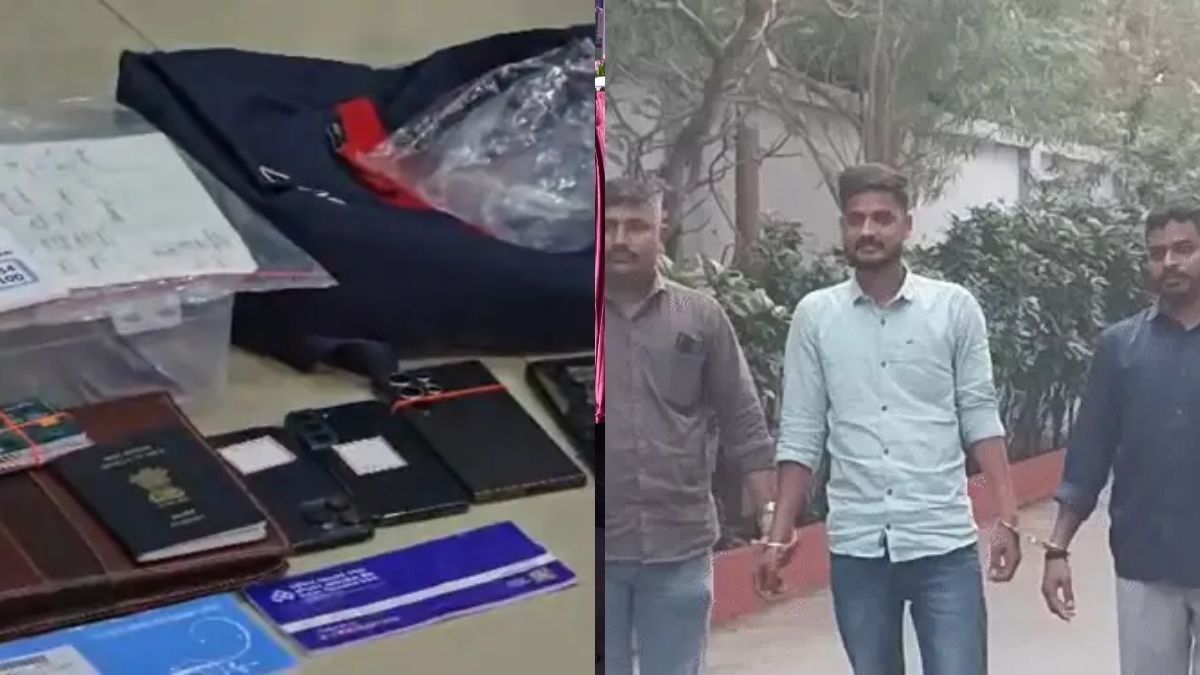
The two prime accused, Mukesh Tarachand Swami and Babulal alias Preet Kaler, were arrested from Panasgam Canal Road in Surat’s Vesu area after being under police surveillance for months. Their arrest has unraveled a sprawling network of cyber fraud, money laundering and international crime links stretching from Surat to Nepal and Cambodia.
“This is not a local fraud. It is an international cybercrime syndicate with deep financial and technical planning,” said Crime Branch DCP Bhavesh Rozia.
Textile Market as a Smokescreen
Investigations revealed that the gang cleverly used Surat’s massive textile trading ecosystem as a camouflage. Operating under the name ‘Sawariya Creation’, the accused posed as big textile traders in the global market. In reality, the firm served as a conduit to move crores of rupees of cyber fraud money through routine-looking textile transactions, making detection extremely difficult.
Phones, Passbooks and 44 Fraud Accounts
During the arrests, police seized passbooks, cheque books, debit cards and four smartphones. A forensic analysis of Mukesh Swami’s mobile phones exposed details of 44 bank accounts, all allegedly used exclusively for cyber fraud. These accounts were linked to cases across multiple Indian states, indicating the nationwide scale of the operation.
6,040 Complaints on NCCRP Portal
When these accounts were checked on the Samanvay–NCCRP portal of the Indian Cyber Crime Coordination Centre, a staggering 6,040 complaints were found registered against them. Preliminary scrutiny of just 940 complaints revealed fraud exceeding ₹750 crore, while calculations for the remaining cases are ongoing. Police estimate the total scam value could exceed ₹2,000 crore.
NGO Turned Money Laundering Hub
A major twist came with the exposure of Vidyapradhan Dharma Foundation, an NGO allegedly misused to legitimize fraud proceeds. Directors Mitesh Vishwas Patil and Ashish Daljit Sharma have been arrested for renting out trust accounts to receive cybercrime money. Over 20 bank accounts were opened in the NGO’s name, effectively turning a charitable front into a financial laundering machine.
Nepal–Cambodia–China Link
Police uncovered strong international links, with operations coordinated from Nepal and Cambodia. A Nepal-based handler named Shibbo managed technical operations and maintained contacts with a Chinese cyber mafia in Cambodia. Mukesh Swami’s travel history—including three trips to Cambodia, two to Thailand and two to Dubai—further strengthened suspicious of global coordination.
Dangerous APK Fraud Technique
The gang’s modus operandi involved sending fake APK links disguised as Aadhaar updates, RTO challans, KYC and income tax notices. Once installed, the APK enabled screen mirroring, allowing fraudsters to steal OTPs and drain victims’ bank accounts without their knowledge.
Crypto, Mule Accounts and Shell Companies
Stolen money was routed through mule accounts and NGO trusts before being converted into USDT cryptocurrency. Police found 83,448 USDT transactions in Swami’s trust wallet since March 2025. Shell companies and fintech platforms—such as Avya Homes International Pvt Ltd, Kimistu IT Solution Pvt Ltd, and Gyaneshwari Organic Pvt Ltd—were also used to layer transactions, finally parking funds in a cooperative bank’s nodal account.
Fake Bank App and Inter-State Crimes
The accused even used a fake app named ‘ESAF Small Finance Bank’ to generate bogus transaction screenshots to deceive mule account holders. Mukesh Swami was also found wanted in Rajasthan cybercrime cases, making his arrest a significant inter-state breakthrough.
“Four accused have been arrested and remanded for seven days. Several key conspirators, including Nepal-based Shibbo and Cambodian operatives, are still absconding,” DCP Rozia confirmed.
With multiple teams deployed and international leads being pursued, Surat Police believe more arrests and shocking revelations are imminent, marking one of India’s biggest cybercrime crackdowns to date.