






No Scientific AQI Monitoring in Surat, Sensors Likely Tampered: MSH Sheikh
Surat | Gujarat — Surat, the economic capital of Gujarat, which houses the diamond and textile industries is lagging when it comes to measuring the actual Air Quality Index (AQI) through a scientific...

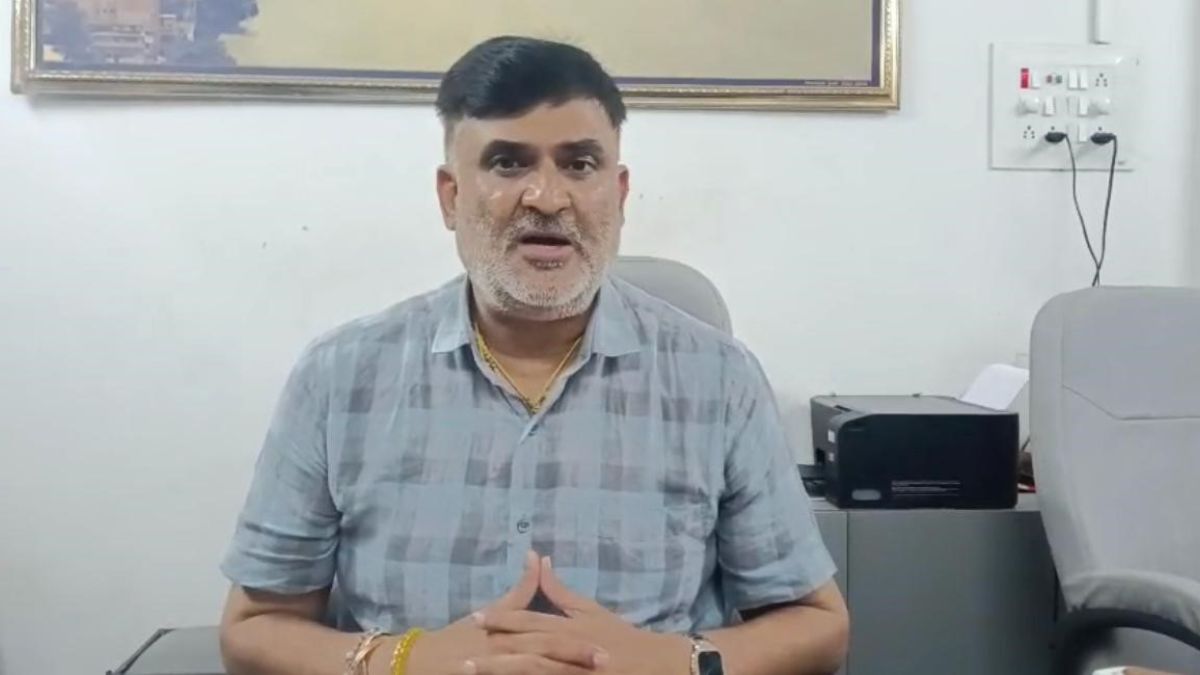
Surat | Gujarat — Surat, the economic capital of Gujarat, which houses the diamond and textile industries is lagging when it comes to measuring the actual Air Quality Index (AQI) through a scientific system. Reason : environmentalist and president of the Brackish Water Research Centre (BWRC), MSH Sheikh, has made explosive claims that there is no scientific system in place to measure the actual Air Quality Index (AQI) in Surat, raising serious questions about transparency, accountability and public health in one of Gujarat’s fastest-growing cities.
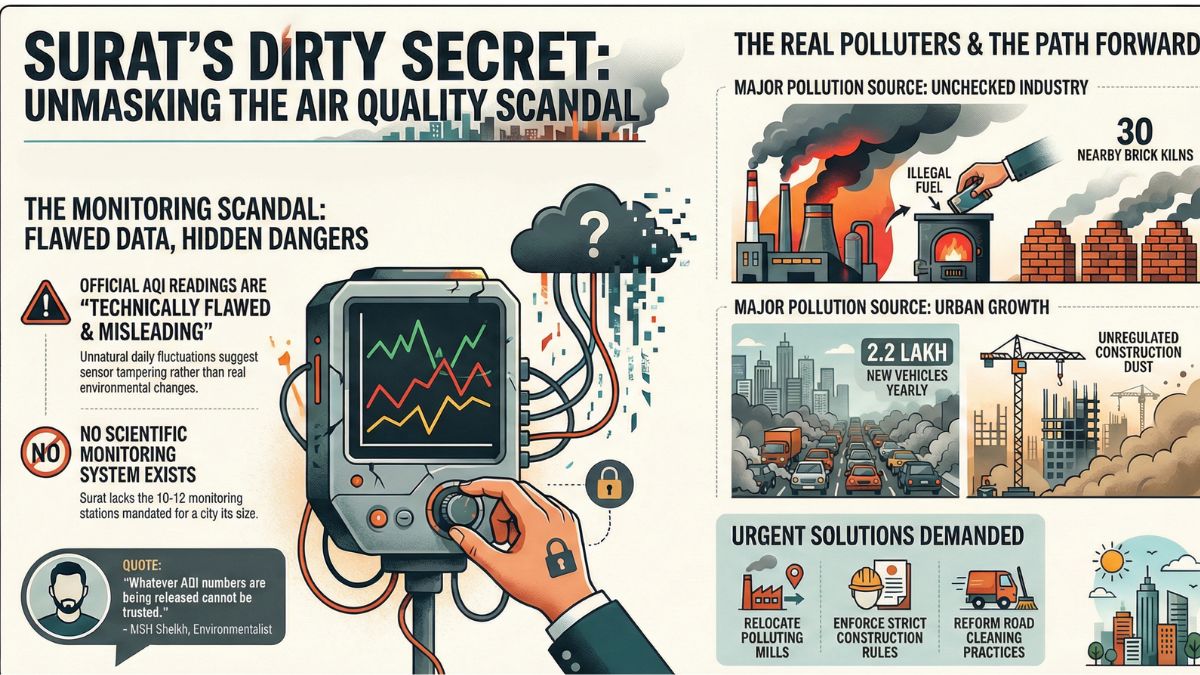
Calling the daily AQI readings “technically flawed and misleading,” Sheikh said it is scientifically impossible for AQI levels to be consistently higher in the morning and drop sharply in the afternoon unless monitoring sensors are being tampered with or manipulated.
“This kind of AQI fluctuation does not happen naturally. It can only occur when the sensors are interfered with. Surat does not have a scientific AQI monitoring mechanism at all,” Sheikh said.
According to him, accurate AQI measurement is only possible through a robust monitoring network as prescribed under the National Clean Air Programme (NCAP), which mandates continuous monitoring stations at 10 to 12 scientifically identified locations across a city the size of Surat. “Without this system, whatever AQI numbers are being released cannot be trusted,” he added.
Sheikh stressed that instead of placing the entire burden of environmental management on the Surat Municipal Corporation (SMC), the Gujarat Pollution Control Board (GPCB) must first ensure that its monitoring infrastructure is credible, transparent and tamper-proof.
What’s Polluting Surat’s Air?
Listing multiple contributors to the city’s deteriorating air quality, Sheikh pointed to unchecked industrial activity as a major culprit.
“Illegal fuel is being openly used in textile and chemical units. Burning of rags, petcoke use, and illegal chimney operations are rampant,” he said.
He also highlighted that textile mills operating close to residential areas within city limits are directly affecting public health. Adding to the problem are nearly 30 brick kilns located within a 10-km radius of Surat, many of which allegedly use prohibited fuels.
Vehicle emissions form another major pollution source. “Surat adds nearly 2.2 lakh vehicles every year. Even CNG vehicles contribute to air pollution, though at lower levels,” Sheikh noted.
Construction activity, too, plays a significant role. “Sand, cement and soil dust from poorly regulated construction sites are constantly released into the air, worsening pollution levels,” he said.
Urgent Measures Needed
Sheikh outlined a clear action plan to curb air pollution in Surat. He demanded that mills, illegal stoves and chimneys operating within city limits be shifted outside urban areas. He also criticised the SMC’s road-cleaning practices.
“Road sweeping machines are inefficient. How much dust they collect, where it is dumped—there is no transparency. Daily monitoring should be video-recorded,” he said.
He further called for strict SOPs for the construction industry, warning that without enforcement, pollution from flying construction material will continue unchecked.