








Gujarat Emerges as Heaven for Migratory Birds
Ahmedabad | Gujarat — Gujarat has become a preferred state for birds from all over the world, with an estimated 3,09,062 birds of 334 species recorded in the Khijadia Bird Sanctuary in Jamnagar in...

Ahmedabad | Gujarat — Gujarat has become a preferred state for birds from all over the world, with an estimated 3,09,062 birds of 334 species recorded in the Khijadia Bird Sanctuary in Jamnagar in the last one year. According to the last count of the year 2024, more than 4.12 lakh birds of more than 17 different species have been recorded in Nal Sarovar and 55,587 birds of more than 17 different species have been recorded in the Thol Bird Sanctuary, thus a total of more than 4.67 lakh birds. While in the Wadhwana Wetland area, in Vadodara,, an estimated 35,932 birds of 41 species of migratory birds, an estimated 5,147 birds of five different species and an estimated 12,921 birds of 91 endemic birds have been recorded in the year 2024-25. While in the Kutch region, an estimated 2,564 birds have become guests of Gujarat in the year 2025, as a result of which Gujarat has emerged as a ‘heaven’ for ‘bird life’.
An estimated 3,09,062 birds of 334 species have been recorded in the Khijdia Bird Sanctuary in Jamnagar. The area is home to a rich diversity of birdlife, particularly wetland and waterfowl species. Commonly recorded birds include the pelican, flamingo, spoonbill, ibis, whistling duck, mallard, gadwall, cotton teal, grebes (including black-necked, little and great crested grebe), gulls, kites, eagles, shrikes, kingfishers, pigeons, herons, and various other waterfowl. Migratory species such as gadwall, mallard, gulls and grebes are seasonal visitors, while kingfishers, kites, herons and pigeons are resident birds. Importantly, as per the 2023 population estimation, the population of India’s national bird, the peacock, in the state has crossed 2.85 lakh, reflecting healthy avian diversity and conservation outcomes.
The Nal Sarovar Bird Sanctuary, declared in the year 1969, has an area of 120.82 sq. km. It has received the status of Ramsar Site in the year 2012. The Nal Sarovar Bird Sanctuary falls in the Central Asian Flyway of migratory birds. As a result, 329 species have been recorded in this lake due to migratory birds coming from all over the world. In addition, birds doing passage migration also stop in the Nal Sarovar.
The Thol Bird Sanctuary hosts a wide variety of resident and migratory birds, especially wetland species. Prominent birds recorded here include grebes, pelicans, egrets, herons, spoonbills, shrikes, ducks, swans, falcons and hawks. Other commonly sighted species include kankansar (ibis), kunj (cranes), santakukdi (coots), aad (storks), jalmanjar (jacanas), cormorants, wagtails, pipits and various waterfowl, making Thol an important habitat for avian biodiversity.
Similarly, the Nal Sarovar Bird Sanctuary supports a rich assemblage of birds such as grebes, pelicans, ducks, swans, herons, spoonbills, shrikes, cranes, cormorants, hawks and other waterfowl. The sanctuary is a key wintering ground for migratory species and also sustains a strong population of resident birds dependent on its vast wetland ecosystem.
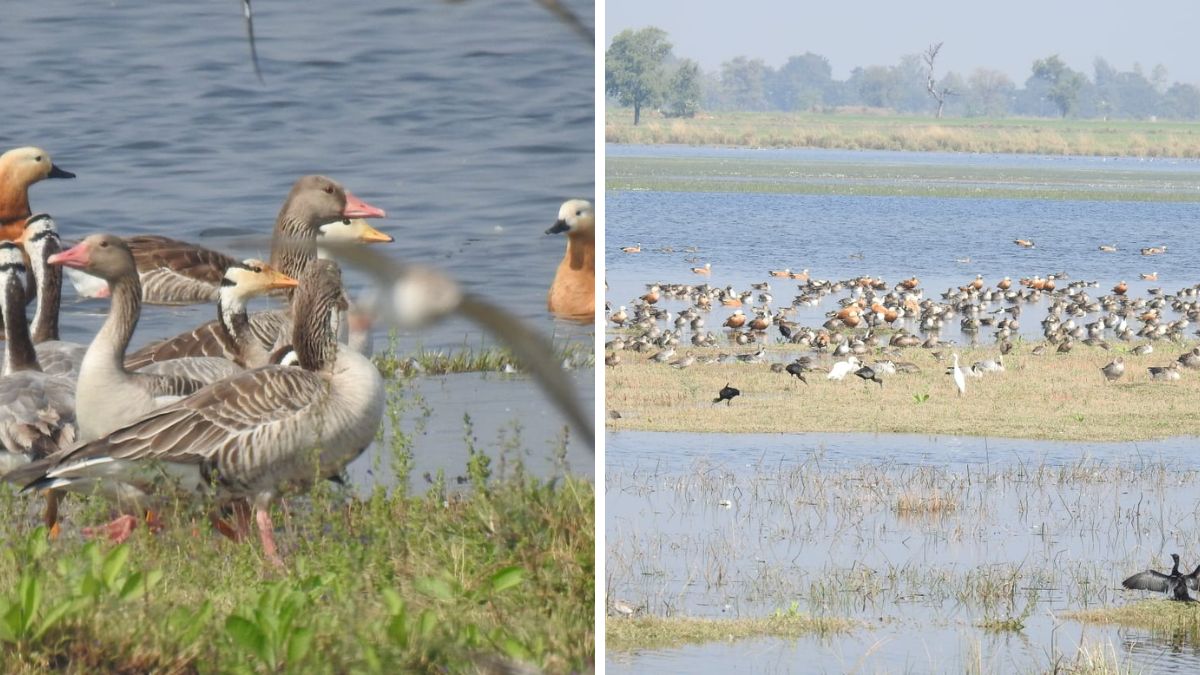
In the Wadhwana wetland area, several migratory birds are recorded during the winter season, including the Greylag Goose, Bar-headed Goose, Red-crested Pochard, Tufted Duck, White-eyed Pochard, Northern Pintail, Common Teal, Ruff and Glossy Ibis. Resident species commonly found here include the Ruddy Shelduck, Comb Duck, Little Cormorant, Lesser Whistling Teal, Paddyfield Pipit, Cotton Teal and Black-necked Stork. The wetland also reports sightings of raptors such as harriers, highlighting its ecological significance for both common and rare bird species.
The ‘Passage Migrant’ count is a leading citizen science initiative in India, which has been conducting scientific surveys of migratory birds from Central and West Asia to Africa every September since 2022. The Kutch region is extremely important as a ‘refueling’ station for these birds, where they feed on insects that emerge after the monsoon before crossing the Arabian Sea.
Last year, from 19 to 21 September 2025, Pranidhi Trust, in collaboration with the Gujarat Forest Department and Bird Count India, organized the fourth and largest edition of the Passage Migrant Count in Kutch, in which more than 200 birders from 17 states joined 51 teams to conduct a detailed survey of 10,000 sq km of Kutch. After an orientation session in Bhuj, the teams covered over 250 survey grids in deserts, Banni plains, thorny forests and coastal areas. Over 250 species of birds have been recorded in over 600 checklists prepared in collaboration with the eBird platform, providing robust data for the ecological diversity and conservation of the region.
The Kutch region has witnessed a significant increase in the number of migratory birds in the year 2025. Of these, 1,577 European Rollers and 313 Spotted Flycatchers have been recorded. Apart from this, 379 species of Common Cuckoo, Blue-cheeked Bee-eater, Rufous-tailed Scrub-Robin, Red-backed Shrike and Red-tailed Shrike have been recorded.
Various initiatives for wildlife conservation and conservation:
Since 2017, the state has been conducting a ‘Karuna Abhiyan’ every year in collaboration with the Forest Department and various organizations to provide treatment to birds injured during Uttarayan, in which thousands of birds injured in various ways, including kite strings, are released after being given proper treatment. Under this campaign, in the year 2025, more than 17 thousand birds injured by kite strings during Uttarayan were rescued and treated.
Every year on January 5, ‘National Bird Day’ is celebrated in various forms across India, including Gujarat. On this day, special programs are organized across the country to create awareness among citizens about saving endangered birds. It is worth mentioning here that water facilities are provided even in the scorching heat of summer for the conservation and conservation of wildlife and birds. While in winter, migratory birds make the land of Gujarat a temporary shelter-home, which is a matter of pride for the citizens of Gujarat.