






The Mystery of the Kalash: Pakistan’s Ancient Tribe of “Alexander’s Descendants”
IMAGINE a land where music, festivals, and faith are so intertwined with daily life that the mountains themselves are believed to breathe. For the Kalash people, this isn’t a fantasy—it is...

IMAGINE a land where music, festivals, and faith are so intertwined with daily life that the mountains themselves are believed to breathe. For the Kalash people, this isn’t a fantasy—it is their reality. Nestled within three isolated valleys in northern Pakistan, this tribe exists as a unique cultural relic where time moves slower.
“While the outside world changes by the hour, the Kalash have maintained harmony with nature,” says one local elder. “The forests are the soul of our identity.” This perseverance makes the Kalash a special cultural highlight of Pakistan, where spiritual freedom is the center of existence.
The Mystery of the “European” South Asians
One of the most striking features of the Kalash is their appearance. Unlike their neighbors, many Kalash possess fair skin, piercing blue or green eyes, and light hair. This has birthed the legendary claim that they are the descendants of Alexander the Great’s soldiers who stayed behind in 320 BC.
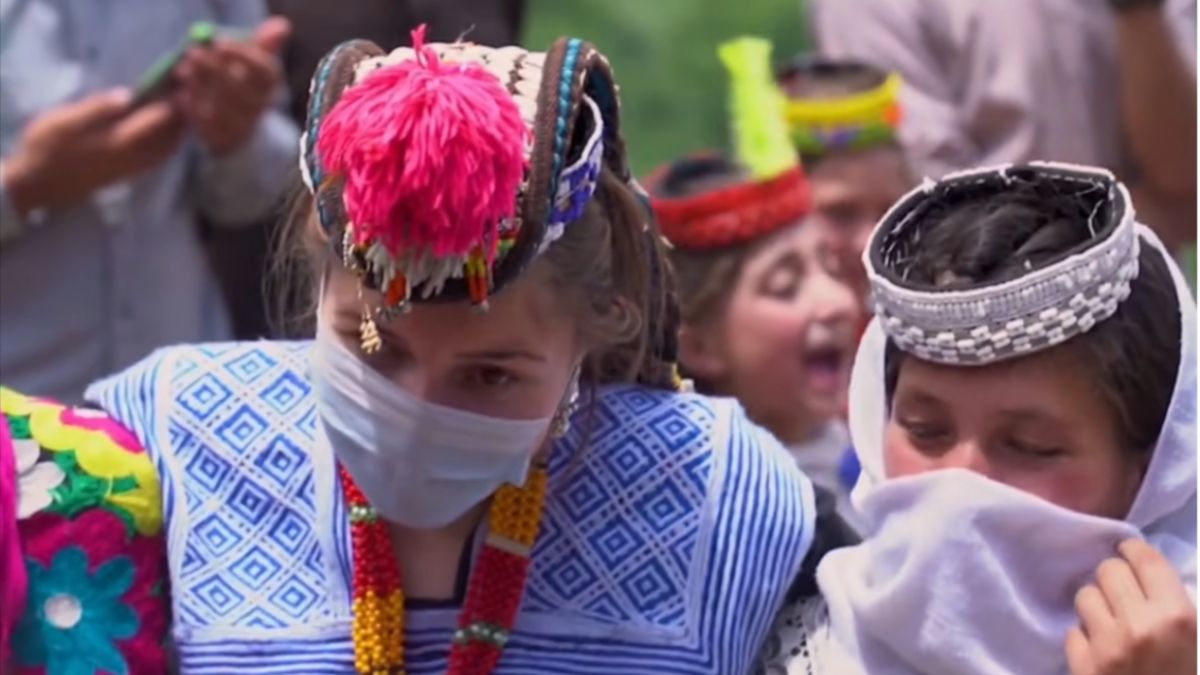
While geneticists debate the “Greek link,” the Kalash take immense pride in their distinct look. Their vibrant embroidered clothing and cowrie-shell headscarves make them a photographer’s dream. During the Chilim Jusht (Spring Festival), the valley erupts in color, music, and dance, showcasing a charisma that has captivated researchers for centuries.
Love, Marriage, and the Freedom to Choose
In many traditional societies, marriage is a rigid contract. In the Kalash Valley, it is an expression of individual autonomy. Kalash women possess a level of romantic freedom rare in the region.
If a woman falls in love with another man—even if she is already married—she is free to pursue that connection. The community does not judge; instead, a practical custom is followed. The new partner pays the former husband “compensation,” usually in the form of livestock (goats), to legitimize the new bond.
“For us, love is a free, deep, and personal emotion. Our festivals are a time for joy and for people to find the partners who truly make them happy,” explains a local community leader.
The Sacred and the Taboo: Bashali and Seclusion
Life in the valley is governed by ancient concepts of purity. Every village has a Bashali, a communal house where women must stay during menstruation or childbirth. To the Kalash, this space is sacred; to outsiders, it is controversial. Men are strictly forbidden from entering or even filming these secluded quarters.
Men, too, have their rituals of isolation. To transition from adolescence to adulthood, young men are sent deep into the mountains to care for goat herds. They survive solely on goat milk and meat, training their endurance. Only after completing this seclusion can they participate in the Chamous winter festival.
The Medical Mystery: The “Day and Night” Sickness
Beyond the beauty lies a baffling medical phenomenon known as “Day and Night Sickness.” In certain villages, children function perfectly during the day—running, playing, and learning. However, the moment the sun sets, they fall into a state of total paralysis. They cannot speak, eat, or even open their eyes until dawn.
Initially, researchers thought it was a dependency on sunlight, but the children can move in dark rooms during the day. Despite international experts visiting the valley, the cause remains unknown—leaving the community to wonder if it is a genetic quirk or a spiritual sign.
Funerals That Celebrate Life
While much of the world views death with somber silence, the Kalash bid farewell with drums and dance. A funeral lasts for two to three days to allow relatives to arrive. To show respect, the family slaughters 30 to 50 goats to feed the entire community.
Historically, the Kalash did not bury their dead but left coffins above ground so souls could remain with the mountains. Today, due to wildlife and theft, they have moved to underground burials, yet the spirit remains the same: death is a transition to be honored with music.
Wine, Spirits, and the White Raven
In a country where alcohol is strictly prohibited, the Kalash hold a unique legal exemption. Wine-making is a sacred ancestral tradition.
Sacred Grapes: Families harvest grapes together to press wine used in religious offerings.
The Mandac Ceremony: On the Friday of the Shamis festival, ancestors are believed to return to eat with the living. Baskets of walnut bread and pumpkin are left for the spirits.
The Divine Messenger: The White Raven is a central figure in their mythology—a bird that turned white after being touched by the gods to carry human prayers to the heavens.
A Community at a Crossroads
Despite their rich culture, the Kalash face immense challenges. Education is a luxury, with only 18% of women and 25% of men able to attend school. There is only one high school for the entire three-valley region. Healthcare is equally scarce, with basic clinics struggling to provide for the high-altitude residents.
The Economic Balance: | Source | Impact on Kalash Life | | :— | :— | | Tourism | The primary income source; visitors pay for photos and cultural tours. | | Agriculture | Survival through millet, sorghum, and fruit orchards (pears, apricots). | | Livestock | Goats are the “currency” for marriages and ritual compensations. |
The Spirit of Hospitality
Perhaps the most enduring trait of the Kalash is their warmth. Young girls greet each other and visitors by lightly kissing the hand—a gesture of deep friendship.
“Every photo, every fruit shared, and every greeting is a bridge to the world,” says a valley resident. As they navigate the tension between preserving their identity and the pull of the modern world, the Kalash remain a testament to the beauty of human diversity.
Quick Facts for Your Journey
Population: ~4,000
Language: Kalasha (Indo-Aryan)
Key Festivals: Chilim Jusht (Spring), Uchau (Summer), and Chamous (Winter).
Diet: Heavily based on dairy, walnuts, and fresh mountain fruits.