


From Child Labour to School: Gujarat Rescue Transforms Life of 13-Year-Old and Siblings
Rajpipla | Gujarat — When children are rescued from labour, it is often seen as the end of injustice and exploitation for the child. But in reality, rescue is just the beginning of the journey...

Rajpipla | Gujarat — When children are rescued from labour, it is often seen as the end of injustice and exploitation for the child. But in reality, rescue is just the beginning of the journey towards justice. Moreover, when a child is rescued from the clutches of labour, the impact of this seemingly one act spreads and touches the lives of many other children and families too.
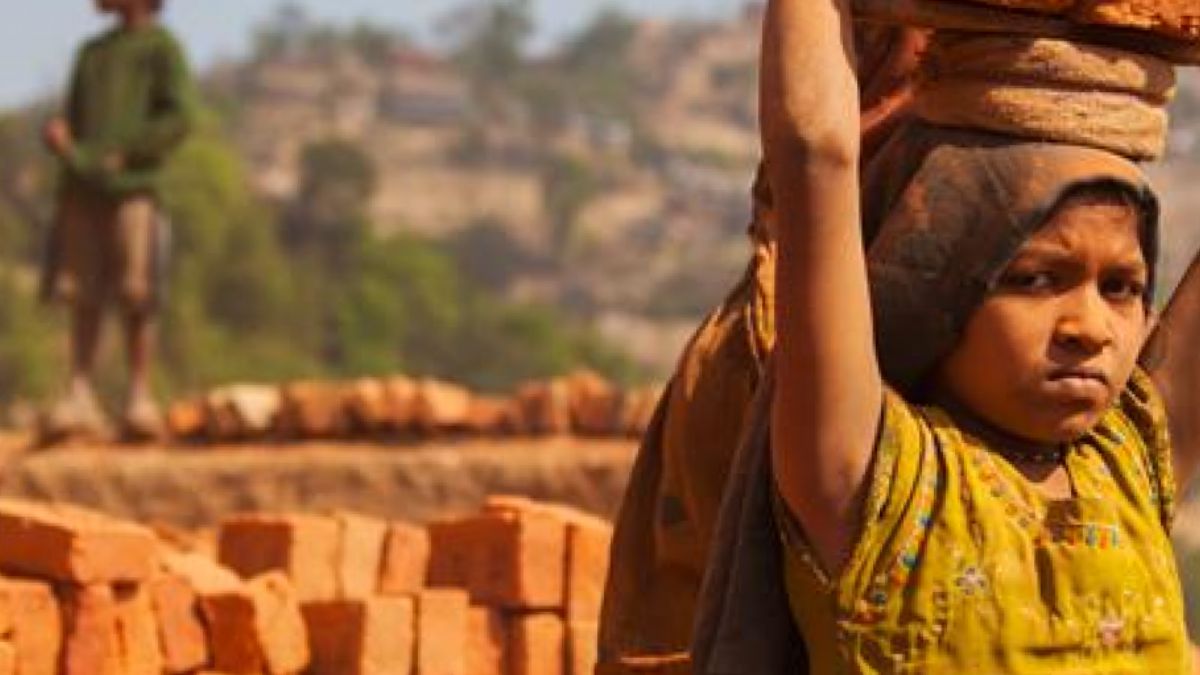
For instance, when 13-year-old Banti (name changed) was rescued from a Brick Kiln unit in a village in the Rajpipla district of Gujarat, it wasn’t his rescue alone. Even though he was the only child at the kiln working in hazardous conditions, his rescue brought in a breakthrough for four other children, too.
When a team of officials from the District Task Force Committee, along with the Labour Department and NGO Gram Vikas Trust, conducted a rescue operation in a Brick Kiln factory in the village, it was still early in the morning. Banti, along with his parents, was at the site working like others. The only difference between him and the others was that while Banti, a child, with his tiny bruised hands, was struggling with the weight and hazards of the work that adults around him could easily endure.
When rescued, Banti looked extremely scared and thought he was in trouble. He was almost in tears when the team rescued him.
“It is ironic how these children have been so conditioned that rescue to them feels scary, while working in such hazardous conditions feel normal. They often are unaware that they are victims of exploitation and that there is a life beyond this that they can claim and live,” explains Ramesh Kasondra, Director of Gram Vikas Trust. The NGO Gram Vikas Trust is a partner of Just Rights for Children (JRC) that works in various districts of Gujarat for child protection and child rights. Just Rights for Children is one of the country’s largest network of over 250 NGOs working in 434 districts.
Banti’s parents from Dahod district were migrant labourers and had found labour jobs at the Brick Kiln unit two months ago. With seven members in the family, the parents decided to engage the eldest son, Banti, so that they would have extra hands to earn. The four younger brothers and the youngest sister stayed at home inside the premises while these three worked.
When asked if Banti had even been schooled, his parents looked embarrassed, and Banti looked clueless.
“He had never been to a school. His siblings, too, had never attended a school. It was so shocking for us to know. Additionally, his parents had no idea that engaging a child this young in labour was a crime,” recounts Ramesh Kasondra.
*From Rescue to Rights*
An FIR against the brick kiln owner was filed at Rajpipla Police Station for employing a minor. Both the parents and the employer were given legal counselling about the punishments and consequences of child labour. Banti was then presented before the Child Welfare Committee (CWC), which directed his parents to ensure his schooling.
Meanwhile, Gram Vikas Trust facilitated school admissions for Banti and his four brothers. His youngest sister was also enrolled in an Aanganwadi.
“Since the family lacked Aadhaar cards and birth certificates, we assisted them with documentation and admission procedures. On the first day of school, we ensured that they had new school bags, water bottles, stationery, etc,” he shared.
*Banti’s First Day of Childhood*
Once all the necessary documentation was in place and school admissions done, Banti and his brothers headed to school. With a brand new school bag on their shoulders and fear in their eyes, they entered a new world.
“Imagine what one rescue operation can lead to. It was heartening to see that not just Banti but all his brothers and sister too were rescued from a life of hopelessness. All these children who had never even dreamt of education are now in school. We feel happy, motivated and inspired to continue on this path that leads to the end of all kinds of crimes against children,” says Ramesh.
When Banti was asked how he felt about this new life, he initially didn’t know how to express himself. “We were very scared. I was especially fearful of what lay ahead. I was excited too. But now that I have friends in school and teachers know me, I like it a lot,” says Banti, rubbing his fingers still scarred from carrying heavy bricks.
Ask him what he likes the most about the school, and Banti replies without taking a second, “Playground!”
*Ripples of Change*
A survey conducted by the National Sample Survey Organisation (NSSO) in 2004-05 revealed that the number of working children is estimated at 90.75 lakh. As per the Census 2011, the number of working children in the age group of 5-14 years further reduced to 43.53 lakh.
“While the numbers have been coming down due to the collective efforts by the administration, police officials and communities, the way forward is still long and arduous. We need to ensure that the perpetrators are punished promptly and without delay. Only then can we instil fear in the people who exploit vulnerable families and engage in child labour. Another important step towards justice is rehabilitation of these children because unless and until we ensure that they have been counselled well, and rehabilitated, the dangers of being retrapped in this vicious cycle of child labour remains high,” opines Ramesh Kasondra.
Banti and his siblings are now in school, discovering a world they had never imagined. Their journey reminds us that rescue is only the beginning. Education, protection, and community support turn that rescue into a life reclaimed. While laws like the Child Labour (Prohibition & Regulation) Amendment Act 2016 provide the framework to protect children, it is the collective action of families, NGOs, and authorities that transforms lives. Each child rescued is not just a story of survival; it is a step toward a future where childhood is safe, free, and full of possibilities.