




Gujarat Unveils Visionary Digital Governance Roadmap with GARC’s 5th Report
Gandhinagar | Gujarat — Gujarat is taking a decisive step toward transforming public administration through digital good governance as part of its Viksit Gujarat@2047 vision, aligned with India’s...

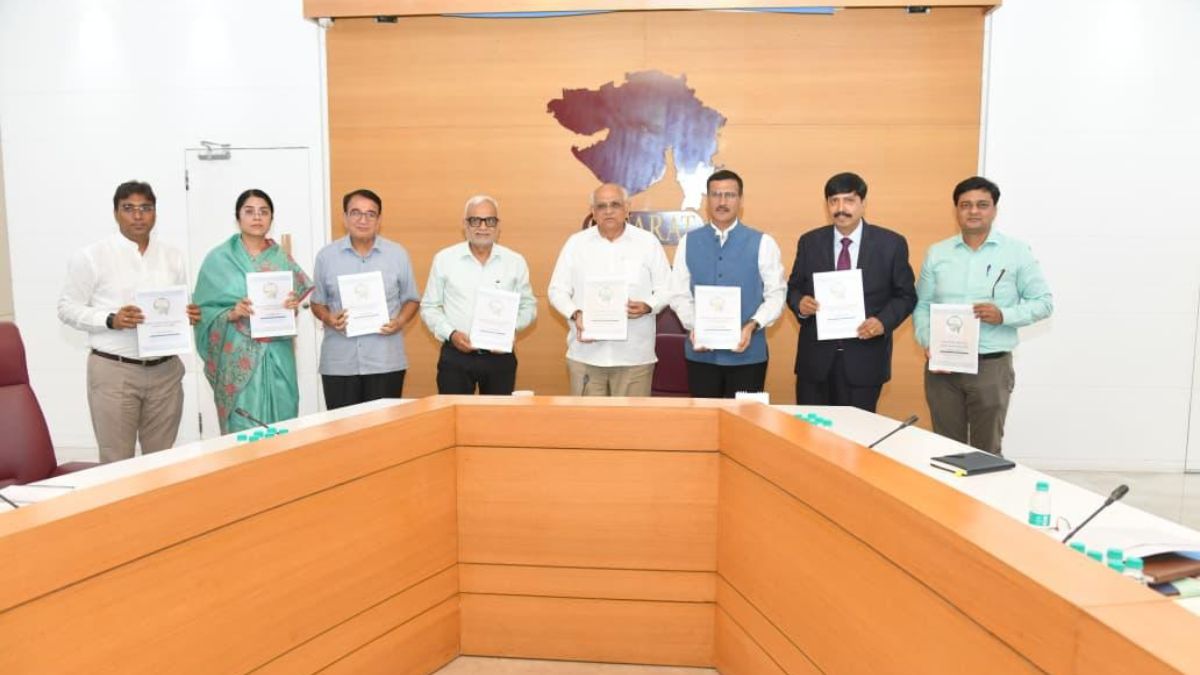
Gandhinagar | Gujarat — Gujarat is taking a decisive step toward transforming public administration through digital good governance as part of its Viksit Gujarat@2047 vision, aligned with India’s national goal of Viksit Bharat@2047. Under the leadership of the Chief Minister, the Gujarat Administrative Reforms Commission (GARC) has presented its fifth report, introducing 12 forward-looking recommendations designed to simplify governance and strengthen the Citizen First approach.
The new report, led by Dr Hasmukh Adhia, Principal Advisor to the Chief Minister and Chairman of GARC, envisions a governance model that places citizens at the centre of every decision. “This report goes beyond technology—it brings a new culture of good governance, ensuring the government reaches citizens, not the other way around,” said Dr Adhia.
One State – One Portal: Seamless Access to All Services
At the core of the report is the proposal to develop a “One State – One Portal” system, consolidating all government services into a single digital platform. This model will allow citizens to access services with a Single Sign-On (SSO) ID, integrating data through Aadhaar and DigiLocker to eliminate repetitive documentation.
The idea — “Give information once, get benefits repeatedly” — aims to make government services more efficient, transparent, and accessible. The framework strengthens Gujarat’s long-standing commitment to “Government at the Doorstep of the Citizen.”
Digital Gujarat 2.0 and Smart Citizen Alerts
A key recommendation is the creation of Digital Gujarat 2.0, an upgraded, interactive platform for end-to-end digital workflows. It envisions real-time updates on applications, approvals, and service status.
To shift from reactive to proactive governance, the report suggests introducing a Smart Alert System that automatically notifies citizens about welfare schemes and extends benefits without separate applications. This data-driven governance approach will ensure that no eligible citizen is left behind.
Transforming Jan Seva Kendras and Empowering Villages
The report also focuses on modernising Jan Seva Kendras (JSKs) across Gujarat, reducing waiting times, and adding guidance desks for smoother service delivery. In rural areas, the role of Village Computer Entrepreneurs (VCEs) will be strengthened, while urban regions will benefit from Public-Private Partnership (PPP) models for better operational efficiency.
Under the Right to Citizen Public Service Act, GARC recommends regular audits, updates to the Citizen Charter, and process clarity to ensure faster service delivery.
The Commission also proposes initiatives like “Less Paper – More Facilities,” which will standardise forms, digitise approvals, and eliminate unnecessary stamps — all promoting a more sustainable, transparent administration.
A New Era of Digital Governance
The GARC report aligns perfectly with the Prime Minister’s vision of “Nagarik Devo Bhav” — Citizens First — and Gujarat’s ambition to lead the nation in smart governance and administrative efficiency. With initiatives like Digital Gujarat 2.0, One State – One Portal, and Smart Alerts, the state is poised to create a governance model that is transparent, data-driven, and citizen-empowered.