




Gujarat Government Stops Accepting Ration Cards as ID Proof, Limits Use to PDS and Gas Connections
Gandhinagar | Gujarat — In a major administrative reform, the Gujarat government has announced that ration cards will no longer be accepted as proof of identity or residence. Under the new Gujarat...

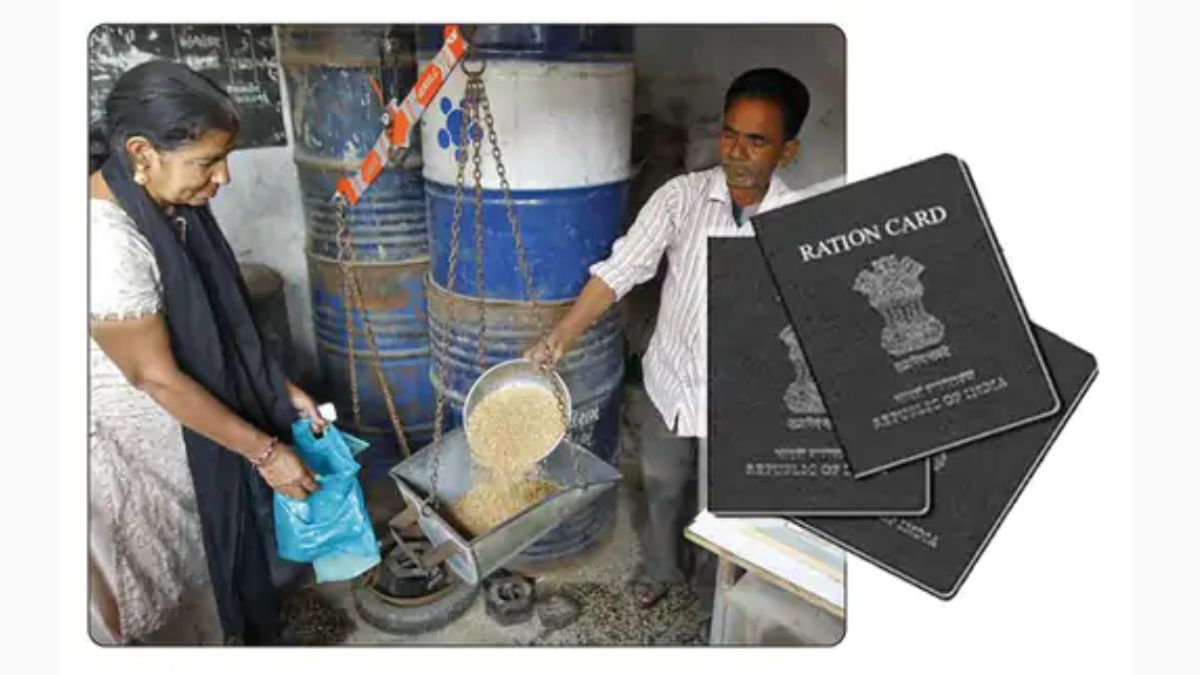
Gandhinagar | Gujarat — In a major administrative reform, the Gujarat government has announced that ration cards will no longer be accepted as proof of identity or residence. Under the new Gujarat government ration card rule, the card’s use will now be strictly limited to Public Distribution System (PDS) benefits and gas connections. The decision aims to streamline documentation, enhance transparency, and curb misuse in official and financial processes.
Ration Cards Restricted to Food and Fuel Distribution
According to a government notification, ration cards will now only be valid for receiving subsidized essential items such as food grains and fuel under the PDS. They will no longer be considered as valid proof for official, financial, or administrative purposes — including passport applications, banking, licensing, or voter registration.
Officials clarified that the decision is intended to “bring uniformity and clarity in documentary verification and reduce duplication of records.” Citizens will now need to furnish Aadhaar cards, passports, driving licenses, or electricity bills as valid proof of identity and address for all government and private applications.
Government’s Festive Initiative for BPL and Antyodaya Families
While revising the ration card’s purpose, the Gujarat government has also introduced festive welfare measures to support economically weaker families during Diwali. Over 3.26 crore beneficiaries of more than 75 lakh ration card holders are receiving free food grains such as wheat, rice, millet, and jowar from 17,000 fair price shops across the state under the Pradhan Mantri Garib Kalyan Anna Yojana (PMGKAY).
Announcing the initiative, Food and Civil Supplies Minister Kunwarji Bavlia said, “Chief Minister Bhupendra Patel’s government is committed to ensuring that every Antyodaya and BPL family celebrates Diwali with dignity and adequate food security.”
Nutritional Security Through Concessional Rates
Under the Antyodaya Anna Yojana (AAY), families are receiving 35 kg of food grains per card, while Priority Household (PHH) beneficiaries get 5 kg of food grains per person. To ensure protein-rich nutrition, the government is providing 1 kg of gram at ₹30 and 1 kg of tur dal at ₹50 per card.
Additionally, salt is distributed at ₹1 per kg, while edible oil and sugar are being provided at concessional rates — ₹100 per liter for oil and ₹15–₹22 per kg for sugar, depending on the beneficiary category.