








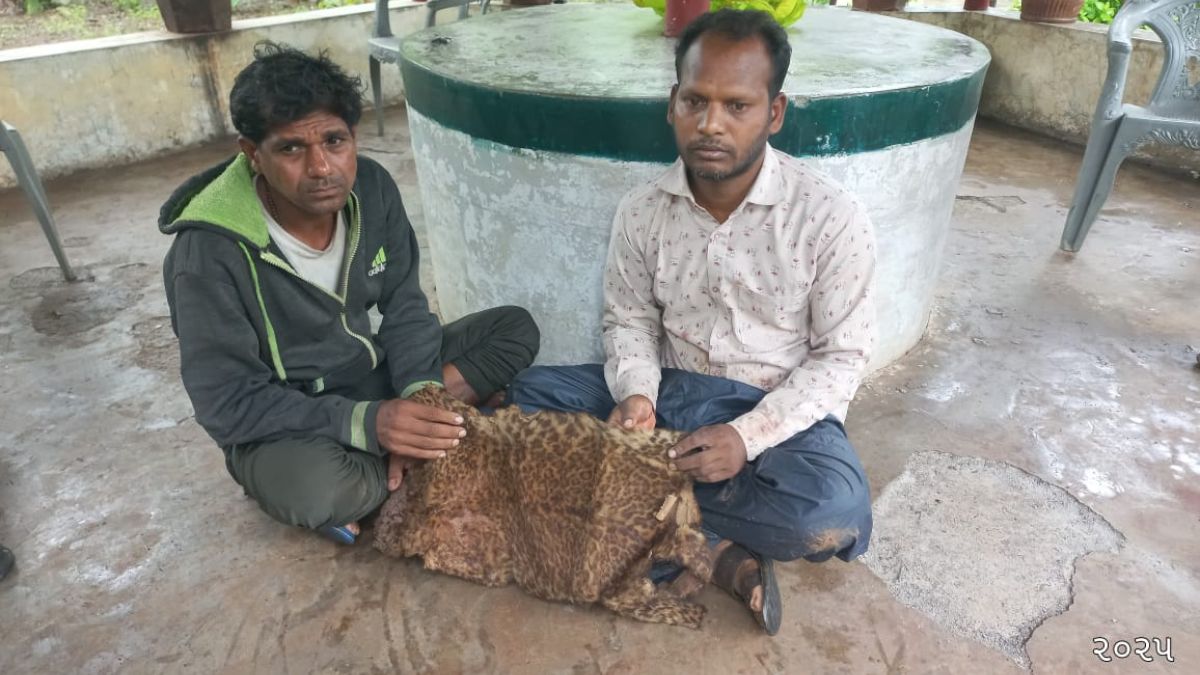
Gujarat : Leopard Cub Skins seized from Valsad
Valsad, Gujarat – The silent roar of India’s precious wildlife echoed a cry for justice this week as a relentless crackdown by the Gujarat Forest Department, in a powerful alliance with the...

Valsad, Gujarat – The silent roar of India’s precious wildlife echoed a cry for justice this week as a relentless crackdown by the Gujarat Forest Department, in a powerful alliance with the Wildlife Crime Control Bureau (WCCB), ripped open a sinister underbelly of illegal wildlife trafficking. In a hard-hitting operation that sent shivers down the spines of poachers and traffickers, authorities successfully intercepted a heinous consignment that included the horrifying discovery of leopard cub skins, arresting three alleged offenders in the process. This isn’t just another bust; it’s a stark reminder of the escalating war being waged to protect India’s irreplaceable natural heritage.
“This operation is a testament to our unwavering commitment to protecting India’s precious wildlife from the clutches of these ruthless criminals,” declared a high-ranking official from the Gujarat Forest Department, who wished to remain anonymous due to the ongoing nature of the investigation. “The discovery of leopard cub skins is particularly egregious and underscores the desperate measures these traffickers will resort to for illicit gain.”
The precision-timed operation, a symphony of coordinated efforts, saw teams from the Valsad North Forest Division, Valsad South Forest Division, and the WCCB converge with surgical efficiency. This seamless collaboration is a chilling warning to those who seek to profit from the destruction of India’s biodiversity. It unequivocally demonstrates the forest department’s amplified vigilance and their resolute determination to stamp out wildlife crime in the region, leaving no stone unturned in their critical mission.
Illegal trade in wildlife articles is not merely a clandestine activity; it’s a direct assault on the very fabric of our ecosystems and a grave offense under the formidable Wildlife (Protection) Act, 1972. The law carries severe penalties, including hefty fines of up to ₹1 lakh and imprisonment for up to seven years – a deterrent designed to cripple these illicit networks. In this specific case, the Lavkar Range has wasted no time in booking the offence under the stringent Sections 2, 9, 39, and 50 of the Wildlife (Protection) Act, 1972, laying the groundwork for a robust prosecution.
“We are sending a clear message: Gujarat is not a safe haven for wildlife criminals,” stated a spokesperson for the WCCB, emphasizing the cross-agency cooperation. “Every single piece of evidence seized, every individual arrested, brings us closer to dismantling these entire rackets that are preying on our natural wealth.”