








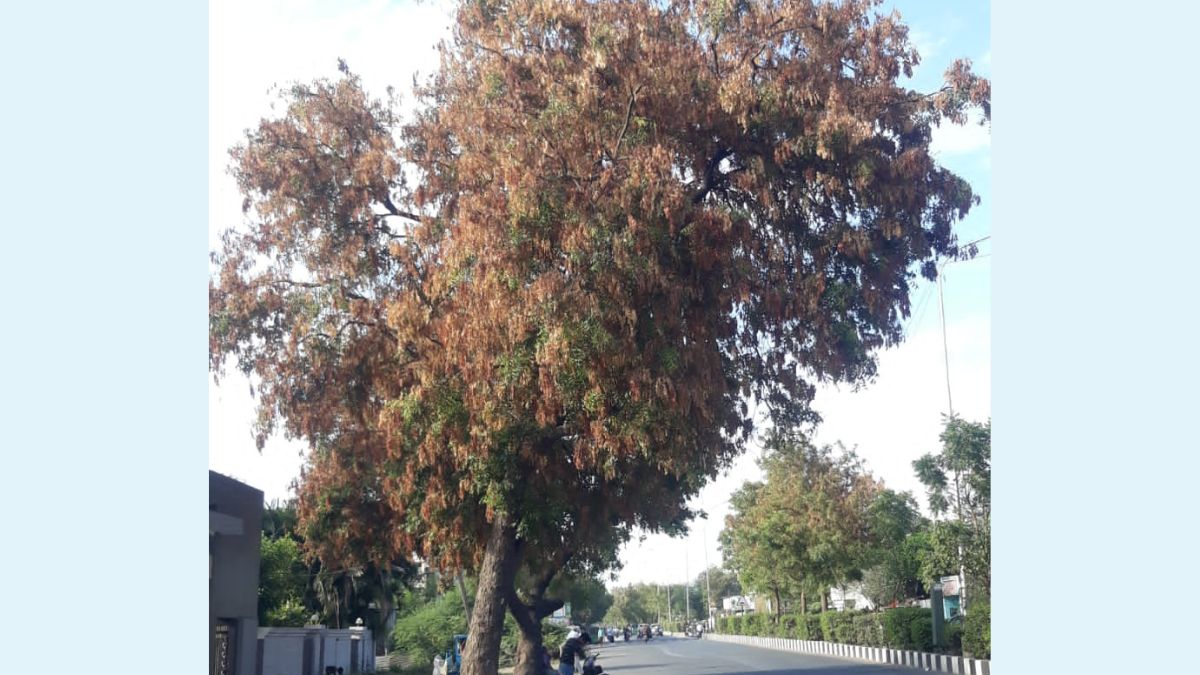
After South India, dieback disease hits neem trees in Surat
Surat : Neem, India’s acclaimed medicinal tree, has thrived alongside human settlement all throughout the nation and has become an essential element of the Indian way of life. However, this...

Surat : Neem, India’s acclaimed medicinal tree, has thrived alongside human settlement all throughout the nation and has become an essential element of the Indian way of life. However, this does not protect them from pests and diseases.
Due to the widespread illness, tens of hundreds of neem trees are drying up in the diamond city of Surat. Twigs and leaves of neem trees have dried up in large portions of the city, prompting anxiety among residents, environmentalists, and nature lovers.
According to environmental specialists, neem trees have been affected by ‘dieback,’ a fungal disease. When a fungus infects a neem tree, it starts to dry out and its productivity suffers.
Ironically, neem, which has grown to be associated with delivering good health to other trees, animals, and humans via its twigs, leaves, blossoms, bark, seeds, and fruits, has been dying as a result of a rare bug discovered three decades ago. Neem is a natural insecticide that has recently become a victim of a bug that exclusively targets neem plants.
According to experts, the fungal infection known as ‘phomopsis azadirachtae’ kills neem trees, especially elderly ones. However, the younger and stronger neem trees survive the onslaught even when their branches dry up.
Darshan Naik, a farmer leader, said, “We have noticed that the neem trees in Surat are drying up.” Many experts believe the disease is widespread throughout Gujarat. What is believed is that industrial pollution, particularly from the massive companies situated in the Hazira belt.”
Hundreds of neem trees are drying up in Surat, with the illness withering the branches. Residents are concerned about the rapid drying of the neem trees, and many have begun watering them in the belief that the plants are not receiving enough water owing to the searing weather.
Rising humidity and climate change, according to experts, are two significant causes of neem infection.